More on untimely atlanticism & trade

In, Untimely Atlanticism, a note on the UK-US Tech Prosperity Deal, I outlined the inadequacy of the proposed agreement. I fear the development of an AI/Finance based economy due to its fragility, its low job creation potential, its innovation destruction capability and lack of utility to consumers. Who needs more cat memes?

by deepai.org CC0 based on a prompt by davelevy

In writing my response to Burnham’s Conference 26 speech, I checked out what had happened since its signing. I asked Google, “are the projects announced with the UK-US trade prosperity deal still in place” and it replied,

The major UK-US prosperity deals face partial pauses, delays, and ongoing re-negotiation rather than smooth, full implementation: [1, 2, 3]

Technology Prosperity Deal: Pledged £31 billion to £150 billion in US tech investments, this deal was paused by Washington in December 2025 due to disputes over the UK’s Digital Services Tax, agricultural food standards, and the Online Safety Act. Both sides cautiously restarted preliminary talks focused on civil nuclear and fusion projects in early 2026. [2, 4, 5, 6, 7]

Economic Prosperity Deal: Reached in May 2025 to provide partial tariff relief in sectors like aerospace, autos, and beef, it remains an unfinished framework. Key issues like steel quotas, digital trade rules, and non-tariff barriers are still stalled or subject to ongoing friction. [1, 8]

Pharmaceutical Arrangement: Agreed to in December 2025, this deal exempted UK pharmaceuticals from steeper US tariffs in exchange for commitments expected to increase NHS medicine spending, though some private firms have paused or redirected domestic investments due to rising business costs. [1, 4, 9]

[1] https://publications.parliament.uk

[2] https://www.reuters.com

[3] https://www.reddit.com

[4] https://www.bbc.co.uk

[5] https://www.techuk.org

[6] https://bisi.org.uk

[7] https://www.theguardian.com

[8] https://publications.parliament.uk

[9] https://tjm.org.uk

Google also suggested looking at “One year on, the Tech Prosperity Deal has left UK more exposed to US pressure” from the Trade Justice Movement which looks at the Economic, Technology, and Pharmaceutical deals. It ends with a paragraph entitled, “Ending ‘forever negotiations’ with Trump”. They say,

“One year after the UK and US announced their Technology Prosperity Deal, “One year after the UK and US announced their Technology Prosperity Deal, our new briefing finds that the UK’s approach to negotiating with Donald Trump has delivered little certainty while leaving key areas of public policy increasingly vulnerable to US pressure.”

Taken together, they, [the three deals], show an ongoing pattern of negotiations conducted under US economic pressure …

This is part of a bigger pattern. The UK keeps negotiating in search of stability, but the stability never arrives. As soon as one negotiation ends, another demand appears. …

… the briefing calls on the new government to end the policy of “forever negotiations” and take a different approach, with clear red lines and greater democratic accountability.

This is not particularly original, there’s a lot of quotes but I first wrote about the trade deal on this blog and so have posted this follow up here too. I like to quote people who substantiate my polemics. The bottom line is that the UK-US Tech Prosperity Deal was in my mind never going to deliver much to the UK, and time has proved me right.

I finished last year’s article, with the phrase,

In IT, as in defence, the UK’s future is becoming a choice between the USA and the European Union; this treaty is just another piece of untimely Atlanticism, …
 …

What’s happening to Labour with respect to the EU?

What happened at Labour Party conference and what will happen next on the subject of relations with the European Union?

Burnham’s speech to Labour Conference has changed the debate in the country and the Party.  

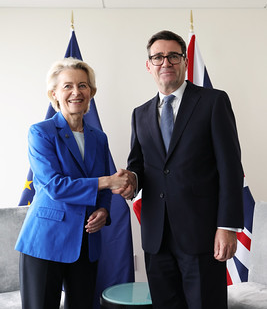
At the UN GA , via flickr No10, CC 2026 BY-NC-ND

The quote on the topic of the EU, is,

We will not give Britain the clear path we need into the rest of the century until we decide on a long-term relationship with what is still our largest market. I cannot say to you truthfully that where we are is good enough.

Brexit has done more harm than good.

We need to restore a higher level of growth and prosperity for Britain.

So, I will take the opportunity around the summit to lay out to you, to lay out to the country, what I believe the different options are for Britain’s long-term relationship with our European partners.

He goes on to specify the options as the status quo, customs union, single market and full membership.

We will need  to wait and see exactly what he says at the next EU-UK summit, although he seems to be asking for opinions from think tanks, but not it seems Labour Party conference.

Clarifying the choices and showing an inclination is positive.

Only one option, that of full membership makes sense;  the single market is indivisible and being a rule taker is inappropriate for an economy and population of the size of the UK. While negotiations may occur, the opt-outs have gone and we’ll need to show good faith in the negotiations and the more difficult we are, the more difficult the EU and the member states will be. It still needs a unanimous vote of member states.  Full membership would also allow he UK to join the EU’s Cohesion programme and the European Green Deal programme both allowing the pursuit of Burnham’s “good growth in every postcode” promise.

I am of the view that his timetable is to give him time to persuade elements of the PLP that this needs to be done. We can see various commentators raising a shopping list of demands on the EU, on financial services regulation, the Euro, Schengen and some even suggesting we need to be outside the EU’s digital market rules. These are designed to slow or disrupt any progress and must be opposed.

The reaction of some of think tanks has been positive with Best for Britain finally calling to rejoin, Galsworthy of the EM correctly sees it as dropping Starmer’s red lines, and even the UKCIE and Anan Menon supporting the move.

Bu underlining all this, is he disparity of size between the UK and the EU, Finland took two years to enter the EU, others have been failing for over a decade. The UK needs to show that we’ have learnt; the EU is a union of people, not just a trade club. …

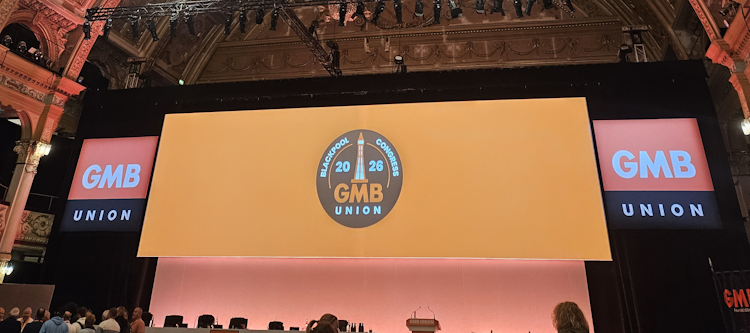
Finally, on GMB Congress 26

I have just finished my write up of GMB Congress 26, held in Blackpool and you can find the long form report on my blog, tagged GMB26.

the platform at gmb26 in the blackpool wintergardens

Please note that this report has taken far too long to produce, for which I apologise and I have backdated the articles to near the date of occurrence. The first article in the series, points at the GMB’s congress document file folder, which will help follow the report …

On reference backs at Labour Conference

Last year at #Lab25, the reference backs submitted were not put to Conference. Here are the rules and procedural guidance that says they should. It would seem that the CAC seeks to avoid votes and moving speeches.

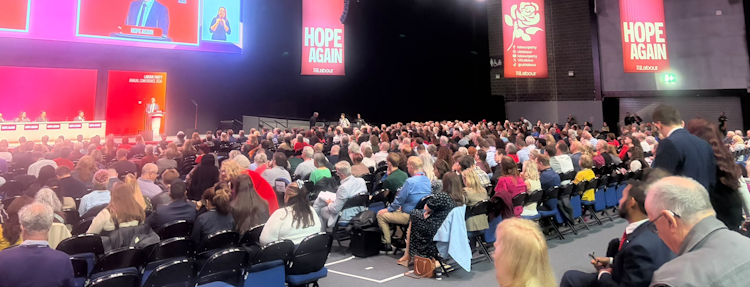
#lab26 – conference floor (c) 2026

The Delegates Briefing promises that the CAC will publish the relevant reference backs in the daily report. CAC2 does not contain these references and I understand that no reference backs were called this a.m.

If someone wants to make a point of order, then these rules below or overleaf apply, …

Labour Party: Rule 2.2.8 dignity and respect

Labour Party: Rule 2.2.8 dignity and respect

I am just writing something for CLPD’s yellow pages, and need to reference Labour’s rules on membership rights.

There follows an extract of rule C2.2.8.

Members have the right to dignity and respect, and to be treated fairly by the Labour Party. Party officers at every level shall exercise their powers in good faith and use their best endeavours to ensure procedural fairness for members.

I’d suggest that this is not a rule well observed.  …

The EU, the State of the Union and associate membership

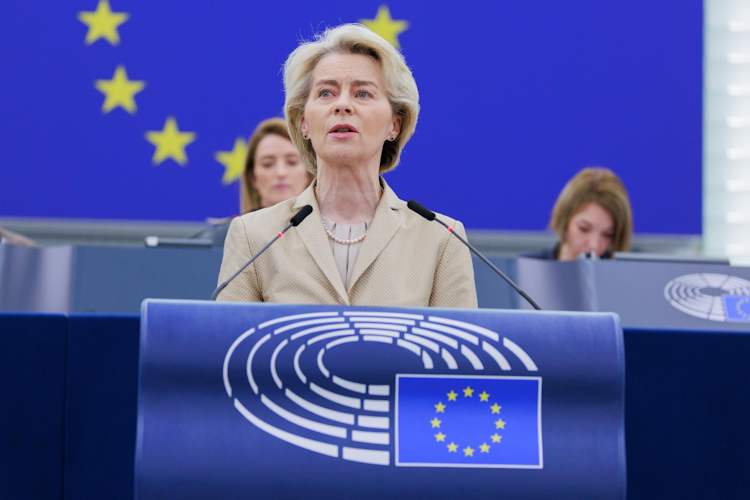
Yesterday, Ursula van der Lyon delivered the annual state of the union speech from the Commission to the European Parliament.

(C) European Union 2024

The headline reporting by much of the press and the pro rejoin commentariat it’s that she offered Canada access to an associate membership status with the European Union.She said a lot more than that and I may write a summary of that in other blog. This article looks at the offer to Canada, and the UK’s needed response to the current state of play within the EU.

This is a massive indication of Canada’s determination to avoid annexation by the United States.  Formally, on the EU’s side,  this would require treaty change, which is highly unlikely to occur; what will probably happen is an augmentation of the terms of CETA although even that treaty has not been fully ratified. Subsequent press comment highlights the possibility of reciprocal visa free travel between the European Union member states and Canada.

Some in the UK say that if there’s an associate membership status the UK should also apply for it. It is unlikely that this offer will be made to the UK, as reported in Politico’s article, “Brussels will not offer Associate Membership to Brexit Britain”.  They say that,

One senior EU official told POLITICO that von der Leyen’s offer to Canada is about cutting a deal for a country normally ineligible to join the EU. It isn’t for European countries with commitment issues.

The Politico article does however quote Bell Ribero-Addy and Clive Lewis, arguing for a closer relationship as a step towards rejoining, and opposing the hyper-atlanticism of the Starmer government.

In my mind, the choices are fixing the “reset”, which requires agreement on Erasmus and “Youth Mobility” neither of which seem to be forthcoming, joining the European Economic Area or rejoining the European Union. The EEA can only be a transitional stage for an economy and society consisting of 70m people. It is reported in the Guardian that the HMG want to expand the agenda of the reset to discuss inclusion in the EU’s coming Industrial Accelerator Act, often known as the “Made in Europe” Act. Why not? Bu holding the reset agreement up in order to expand the agenda is not really in our interests and fails to recognise the agreement actually made in May 2025.

It also seems that Burnham’s government have forgotten that the EU’s negotiators can read in English and access the British press. The language used by HMG spokespersons is dripping with exceptionalism and the fact that the UK’s commitments under the withdrawal agreement, TCA and Windsor framework remain unfinished is equally ignored. Again the simplest way to make progress is to complete the reset agenda and then ask to join the EEA as a step towards full membership again. The Guardian article demonstrates arrogance and a failure to understand firstly what’s at stake and secondly the appetite for the European Union to deal with the UK.

The UK was mentioned twice in the speech and each time it is on a list of potential allies, once for AI regulation and investment and the other in the context of defence; in both cases it was linked with Canada.  Another illustration of the priorities of the Union is what Von der Leyen says about enlargement, where she talks more of Moldova, Ukraine and Georgia rather than the western Balkans.

The EU requires the UK to put more on the table; unfortunately, the transition from Starmer to Burnham means the last two years of exceptionally slow learning seems to have been undone. I had some hope that the HMG was learning and would be more flexible and ambitious; it seems not, but Associate Membership is unreal, and again will not available to the UK. …

Backwardness of Glamour

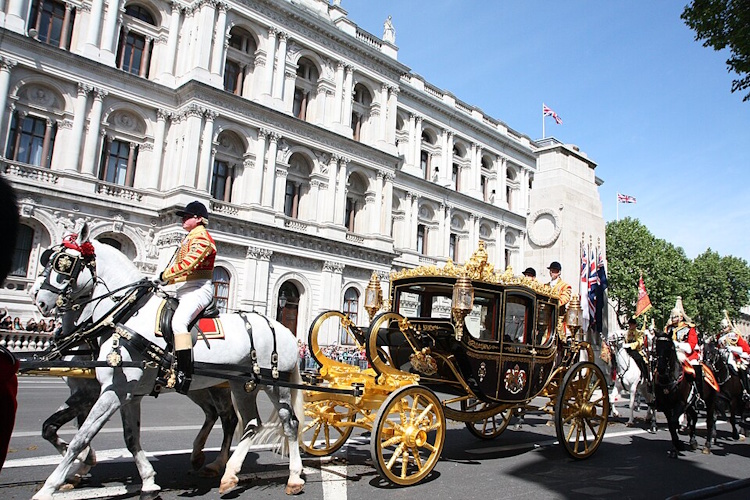
State Opening of Parliament – FCO – OGL1.0 2015

Sometimes one’s feeds actually throw up some golden nuggets. I came across this facebook video reel from Andi Shehu. It’s not very long, but packs a lot in. He argues that much of the support for the Brexit vote was based upon nostalgia for an empire that had already been dismantled and one that today’s voters cannot possibly remember and that that this political nostalgia is fuelled by outdated Victorian traditions at the core of British government, maybe even from pre-Victorian times and that true improvement requires democratic reform. The reel led me to look at some earlier theorists who first articulated these ideas and suggesting that the British state never adopted democracy and remained the instrument of old wealth based on land.

In many ways what came after 1945 was much better and much more democratic and served the mass of the population better than its predecessor. The UK built houses, formed the NHS and developed its manufacturing capability to provide jobs wealth and income to the bulk of the population. People’s memory of the poverty of the Great Depression led them to build a comprehensive welfare state guaranteeing social security and a limited freedom from poverty. This was dismantled by reactionary conservative movements, and the engine of the economy moved back towards finance and the City of London, institutions that have no patriotism and yield no investment in the wellbeing of the British people. These changes were not the fault of Brussels, but the project designers needed a scapegoat as the factories, steel works & mines were closed, and relative poverty, ably illustrated by the work of P. Danny Dorling, ensued.

Shehu then argues that much of the nostalgia is focused on the pomp and ideology of the British State. He quotes Tom Nairn’s ideas about the “glamour of backwardness” where the “mother of parliaments” & the pomp of the monarchy become to be seen as desirable and sources of pride. There are many recent examples of this constitutional exceptionalism, but one egregious example was Andrea Leadsom’s criticism of the European Union as having five presidents that no one could name; at least they’re not hereditary monarchs and the European Parliament is wholly elected by proportional representation.  The conclusion is that the British state is no longer fit to run a 21st century society and that it remains a tool of control of the economy and its people in the interests of an economic elite, which in the UK . looks very much like the old, 18th century one.

I recommend you look at the Facebook reel as he is much more economic in words than I am.

However, watching the video reminded me of the conclusions,  or maybe the premise of “Capitalism divided?” by Stuart Ingram who sought to examine why the British state did not act as “the executive committee of the bourgeoisie”; I found the book fascinating, and I’ve promised myself to review it on this blog.

 At the centre of his argument, is the proposition that the funding of the original industrial revolution was based upon the wealth of the landed aristocracy. The British economy became a commercial economy and the centre of world trade finance; the British state was optimised to defend the power of landed wealth and gave birth to the development of a mercantile economy not a manufacturing one and so it never served the capitalist class. It’s for these reasons that the post 45 reforms were required and the victory of the People’s War gave the working class the confidence to build a “land fit for heroes”.

My two takeaways from the video and my brief limited reading since then, is that democratic reform is a critical part or attempting to build a society free of poverty where people can fulfil themselves in the world of work and avoid alienation and appropriation. Proportional representation, devolution and subsidiarity and the abolition of the monarchy are not side issues to economic fairness. The second takeaway reinforces the idea that the British economy’s continued reliance on global finance is a weakness in delivering for the mass of people in the UK.


See also

  1. The reel author, Andi Shehu has a substack blog.
  2. Shehu mentions Tom Nairn, here is an anthology page at the London review of books.
  3. The two key works from Nairn are, Breaking-up Britain and a review of The Enchanted Glass: Britain and its Monarchy.
 …

Labour and the water industry

Edgbaston reservoir, a lake surrounded by green vegetation in dayligh

I am planning to write a series of responses to Labour NPF report 2026. Some I hope to pursue the conference itself through my CLP, others I hope will be of interest to others in the party. In this article I talk about Water, which I don’t propose to put to my CLP.

In the Commission, “MAKE BRITAIN A CLEAN ENERGY SUPERPOWER”, there is a section on the Water industry, which welcomes the Labour Government’s initiatives to repair the damage done by the conservatives. Most submissions want greater pace. The report also makes little mention of the excessive bonuses being paid to directors of Thames Water, and probably others.

In the conclusions section, on page 25, the obvious policy proposal missing is  the renationalisation of the water boards

The BBC report on 10th August that Thames Water made a £1m signing bonus to a new Finance Director. (This might well be a hook for a contemporary motion, although SERA & Mainstream have published a model motion calling for the renatitonalisation of the industry.)

If this is important to you, take it to your CLP, and submit it to Labour Conference before the 17th Sept.  …

On the Boles proposals

On the Boles proposals

There is an essay by Nick Boles, published on demos website that argues to reframe Starmer’s EU reset by offering to extend Britain’s nuclear umbrella in exchange for a single market in goods. It is claimed this is circulating within government.

It has caused much excitement by the rejoin opposing press and its followers in the Labour Party. It has also been noted by some of the rejoin commentators as an item of hope.

It’s nonsense.

This proposal fails to recognise that, Starmer’s reset has failed, mostly through lack of ambition on the British side. This proposal is similar to the reset agreement made in May 25 which set an agenda, including an enhanced defence agreement. Not one single item of the reset has been finalised.

 The one disappointment I have in Starmer being replaced is that the learning process on the subject of EU relations within the government has been set back. I believe the Starmer speech on 1st May, together with the House of Commons Select Committee report and the Fabian Society’s “Pressing Reset” shows that large elements of labour we’re ready to learn a new lesson.

What needs to be understood is that the European Union will not make an agreement that leaves a third country in a better position than either current members or aspirant members and it considers the single market as indivisible.

The proposal has the benefit to Labour’s Atlanticists that it embeds Britains commitment to the US designed strategic nuclear deterrent, and its proposed extension, the air based so called tactical nuclear weapons in exchange for minimal concessions from the EU. I say, minimal, splitting the single market which is what is proposed is not minimal,  but if the UK is making the offer, it should be able to get more than a single market for goods, even if only seen from the nation of shopkeeper’s accountant’s lense.

The country needs a better deal on all three dimensions of the issue, defence, trade and international solidarity.

Labour’s NPF also shows a continuation of this lack of ambition, and a failure to learn from the failed two years of the Reset.

Rejoining the EU could be the easiest deal in the world if we just forget what we once had and embrace the economic benefits, the opportunity for deeper social relationships between our peoples, and the continued development of a force for peace, democracy and human rights.

This needs ambition and I am very unclear that Burnham’s government is ready for this.

Those of us that want to rejoin need to push harder and articulate achievable goals. The UK should join the single market now, and Labour should put that a Labour Government will seek to rejoin the EU in its next manifesto.


The Russian Ukraine border Sergey Bystro, CC BY 2.0 https://creativecommons.org/licenses/by/2.0, via Wikimedia Commons …